
Exporting solar electricity at midday and importing electricity later can occur at the same building on the same day. Generation and consumption have failed to coincide, even if their daily totals look similar. The solar self-consumption task for commercial energy storage solutions concerns that timing mismatch. Storage can retain some surplus generation for subsequent use, provided charging capacity, remaining battery space and later demand permit the transfer.
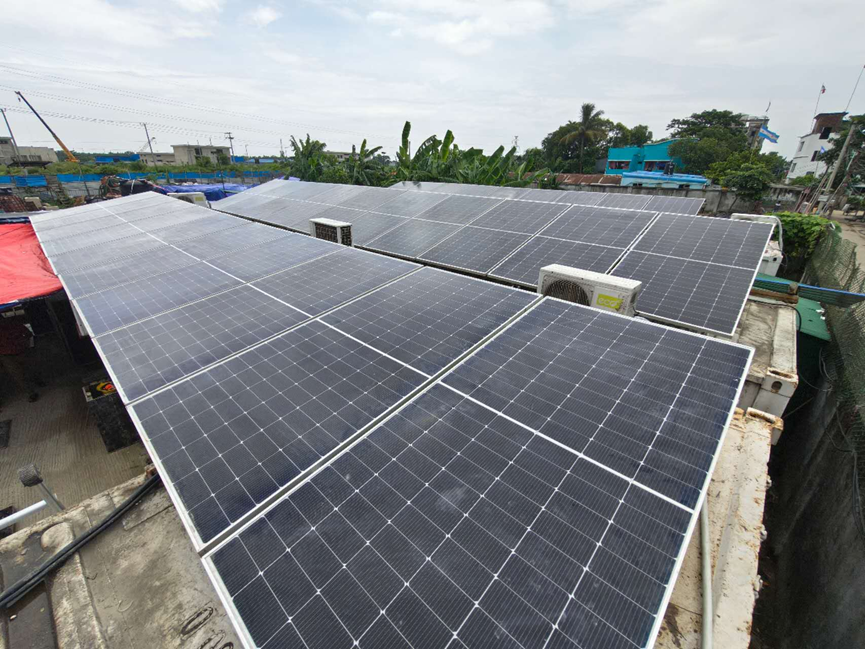
Finding the Solar Energy Available to Store
Surplus begins where available PV generation exceeds the demand being served at that moment. A large array may produce substantial energy without leaving much available for charging during a busy production shift. Conversely, a quiet midday period can create a charging opportunity even where total daily electricity consumption remains high.
Direct solar use and stored solar use take different routes to the same objective. Electricity consumed as it is generated needs no intervening battery discharge, while deferred consumption requires an earlier charging opportunity. The contribution of commercial energy storage solutions therefore depends on the residual generation after simultaneous demand has been supplied.
Two ratios describe different results: the share of PV generation used locally and the share of building consumption supplied by PV. A small array may achieve high local use while supplying little total demand. Keeping the denominators separate prevents a high self-consumption percentage from becoming an unsupported claim of energy independence for the building over the year.
The comparison needs corresponding time periods on both sides. Matching a sunny day’s production with consumption from a different operating schedule can invent a surplus that never existed. Weekends, seasonal opening hours and changes in production can alter the relationship between the array and the building.
Battery space adds another changing condition. An already full battery cannot absorb every additional unit of midday generation, regardless of its nominal capacity. The relevant surplus is consequently the portion that exists while the system has room and permitted power available to accept it.
Following Surplus Through the Electrical Path
Charging moves electrical energy into storage; subsequent discharge returns part of it for the connected load. Conversion and other operating losses mean that the energy recovered is smaller than the energy originally supplied. A credible solar-use estimate keeps those stages visible rather than counting all charging energy as delivered consumption.
In a DC-coupled arrangement, PV generation reaches the DC side through maximum power point tracking controllers. The power conversion system connects that side to AC duties. This architecture provides a route for charging before AC conversion, although the actual flow still follows the configured operating priority and equipment limits.
Charging power constrains how quickly a brief surplus can be captured. Battery energy capacity constrains how much can remain stored for later use. Increasing one without considering the other can leave the intended transfer incomplete, particularly when the available solar surplus occupies only a short period.
Later demand supplies the destination for the captured energy. A building with little consumption after its solar production falls may have less opportunity to use an enlarged reserve locally. Generation, charging and subsequent consumption belong in one chronological energy balance.
Keeping Solar Use Separate from Other Objectives
Self-consumption follows the origin and destination of electricity, whereas peak shaving follows the timing of imported power. Backup introduces a third concern, retaining energy for a possible interruption. These objectives can coexist, but a discharge that serves one objective may reduce the energy available for another.
A schedule for commercial energy storage solutions can therefore assign distinct priorities to the same battery. Holding charge for an outage reduces the portion available for routine evening use. Releasing it during a demand peak may serve an economic objective whose timing differs from the building’s largest solar surplus.
Electricity charged from the grid cannot automatically be described as stored solar electricity. Where several sources restore charge, any self-consumption calculation needs to distinguish their contributions using suitable records and accounting. The mere presence of PV beside a battery does not establish the renewable origin of every discharge.
Applying Ratings and Operating Modes to the Solar Duty
The charging opportunity meets a concrete equipment boundary in the GWTime 125 kW family, with 225 kWh and 257 kWh nominal battery options. Its specified maximum PV input is 240 kW. That input rating describes an equipment limit, rather than a prediction of daily solar production or an assurance that the battery can absorb every instantaneous surplus.
Load-first operation in the GWTime DC-coupled solution directs daytime PV toward the load before surplus charges the battery through the conversion arrangement. This sequence corresponds to the residual-generation calculation established earlier. Solar availability and the operating load determine whether surplus actually reaches storage.
Battery-priority mode changes the allocation: GWTime equipment can restore charge after a preset low state of charge, using available solar or grid supply until the target is reached. A recovered reserve can serve continuity needs, while its charging source remains relevant to solar-use accounting. Reserve recovery and increased solar self-consumption consequently require separate evidence.
The useful result is a traceable shift from a real solar surplus to a later local duty. Daily generation totals alone leave that shift unproven. A coherent operating schedule connects the surplus, the permitted charging interval and the eventual consumption without crediting energy that was unavailable, lost or supplied from another source.
